RETAIL PARK REFURBISHMENTS
THE IMPORTANCE OF DRAINAGE BEHIND FOOD AND BEVERAGE UNITS
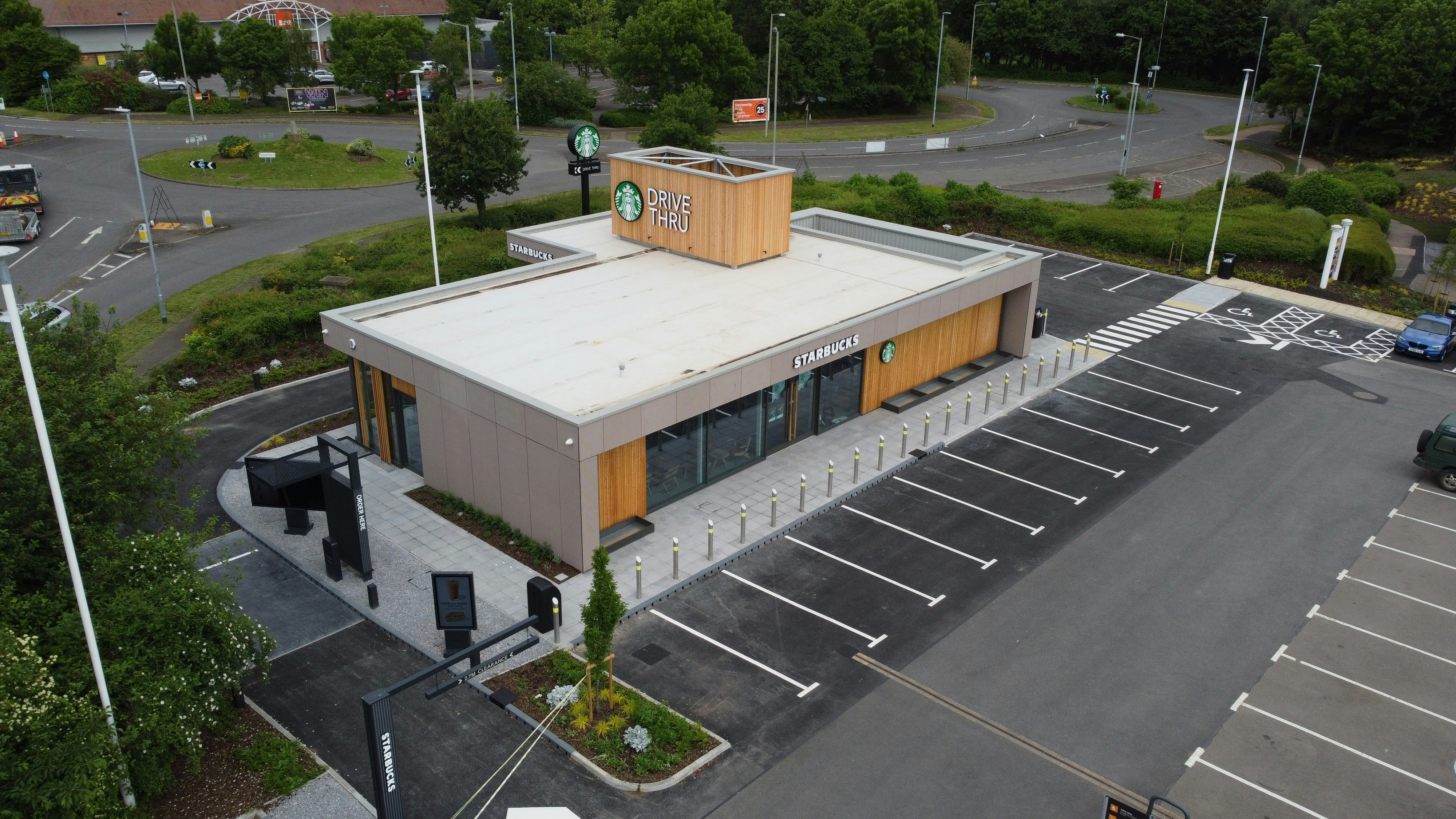
Retail parks and commercial assets are continually evolving to meet changing customer demands and and there is a number of increasing assets being built within the car park.
Whether it’s the introduction of a new coffee drive-thru, food and beverage operator or a wider site refurbishment, significant investment is made in order to improve the customer experience and to maximise asset value.
However, while attention is typically focused on the visible elements of a project, one critical area that gets overlooked is the existing drainage infrastructure, and if it is suitable for the proposed upgrade.
Before any refurbishment work begins, understanding the condition of the drainage system can help avoid costly delays and unforeseen costs later down the line.
Why Start with a CCTV Drainage Survey?
Many retail parks and commercial sites have drainage systems that have been in place for decades.
Over time, pipework can deteriorate, connections may have been altered, and defects can develop without any visible signs at the surface.
A CCTV drainage survey provides a clear understanding of the condition and layout of the existing network, identifying issues such as:
- Structural defects and fractures
- Root ingress
- Displaced joints
- Partial or complete collapses
- Silt and debris build-up and blockages
Identifying these issues before refurbishment works commence allows them to be addressed proactively rather than becoming a problem during construction, and also advise if the current system will work with the proposed upgrade.
Avoiding Delays and Unexpected Costs
One of the most common causes of programme disruption during refurbishment projects is the discovery of unforeseen below-ground issues once works have started.
A drainage defect that may have remained unnoticed during normal site operations can quickly become a significant issue when new foundations, utility connections, paving, or external works are introduced.
Early investigation helps project teams:
- Understand existing infrastructure constraints
- Identify repair requirements before construction begins
- Reduce the risk of unexpected discoveries on site
- Improve cost certainty
- Minimise delays to refurbishment programmes
In most cases, the cost of a survey is minimal in comparison to the value of remediation if issues are only discovered, or occur, once work has commenced.
From Survey to Solution
The value of a CCTV survey extends beyond identifying defects.
Where issues are found, remedial works can be planned and delivered as part of the wider refurbishment programme, reducing disruption and creating efficiencies in both cost and programme management.
Typical works may include:
- Drainage repairs
- Pipe relining
- Localised excavations
- Root removal
- Manhole refurbishment
- Capacity improvements
- New drainage design and implementation
Undertaking these works before refurbishment is completed helps ensure that the asset is not only visually improved but also supported by infrastructure capable of meeting future operational demands.
We have also found that when conducting a CCTV survey post refurbishment, the system has been wrongly connected which is illegal and presents environmental risks.
Supporting Long-Term Asset Performance
When a new food and beverage operator, retail unit or commercial occupier is introduced, the demands placed on site infrastructure can change significantly.
Understanding the condition, both operationally and structurally, and capability of the drainage network allows asset managers, developers and project teams to make informed decisions about any upgrades required to support future use.
Rather than reacting to problems after completion, a proactive approach helps safeguard investment and reduce long-term maintenance liabilities.
Conclusion
Successful refurbishment projects are built on a clear understanding of existing conditions.
While drainage infrastructure may be hidden below ground, its condition can have a significant impact on programme delivery, project costs and long-term asset performance.
By undertaking a CCTV drainage survey at the outset of a project, stakeholders gain valuable insight into the condition of their infrastructure, allowing any necessary repairs or upgrades to be incorporated into the refurbishment programme from the start.
In short, understanding what’s below ground before works commence can help prevent costly surprises above ground.
Our Portfolio
WHY THEY ARE CRITICAL FOR KEEPING SITES COMPLIANT
THE value of treatment plant maintenance

LAMMAS EDITION
THE WJ SHIRLEY QUARTERLY NEWSLETTER