
We were recently instructed by a longstanding client to conduct a drainage CCTV inspection on a large holiday resort in relation to flood risk.
There had been several incidents of flooding both within the site and in the surrounding areas. As a result, our client initiated an investigation to determine the underlying causes to support their mitigation strategy. Therefore, we were required to provide a comprehensive understanding of the existing drainage system.
A particularly serious issue was that flooding from the site is repeatedly entering neighbouring gardens and causing serious damage. Additionally, there are manholes on site where water was actually flowing out of the top and dislodging the cover, indicating there was too much water for the system to hold and presenting a health and safety risk.
Site-Specific Flood Drivers
The volume of water on the site is because the site sits downhill of 2 large fields, with the owner of the field having a Riparian Right to discharge the water onto the site, meaning the responsibility lies with the site to control the water and discharge.
Furthermore, we were also informed that the existing drainage system was not installed correctly, suggesting this was playing a role in the issues onsite.
Our Investigation
It was requested that we only survey the surface-water system, as this is where the regular problems were occurring. We were also required to confirm if the surface-water from the individual residential properties are connected to the main drainage system, or if they simply soak away into the rock beds below.
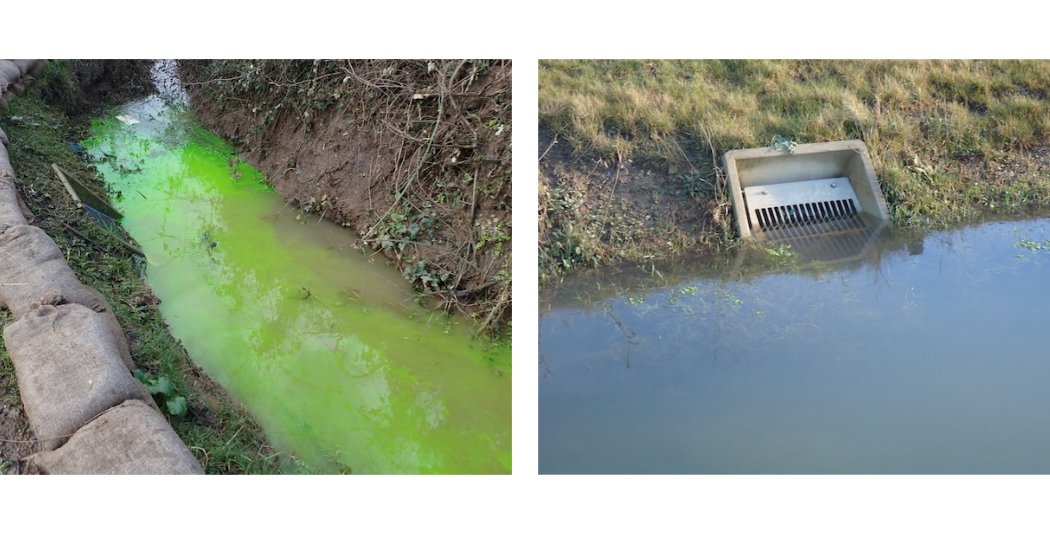
We conducted numerous dye tests, in particular, along a much older surface water line that predates the site. This test informed where the water ran from, and into which pond in order to plot to course the water took.
Our team onsite commented
“Throughout our time on site, we did numerous dye tests which involved a lot of wading around in rivers and drainage ditches looking for inlets and outlets.
We left every day absolutely soaking wet and covered in mud, but it was worth it for a job well done.”
We also used specialised expandable camera heads to wheel the camera down large diameter pipes and used sonde training to get pin point accuracy on the lines we were plotting, as this was crucial for the client’s remediation plans.
Current Flood Mitigation Strategies
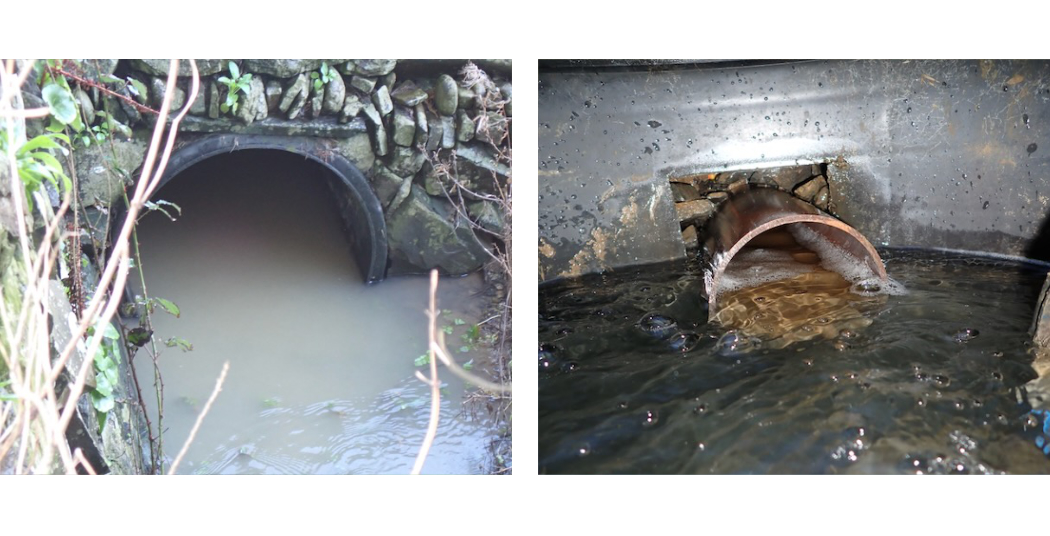
The site has a number of retention ponds installed throughout the site to slow the flow of water down the site as it heads towards 2 outlets at the other end of the site.
There are 2 attenuation valves either side of site (and an attenuation tank on 1 side). Attenuation valves are utilised to regulate the flow of water leaving the site at times of heavy rainfall. The site has a number of retention ponds installed to store water before it leaves the site, therefore it was vital that the ponds had the capacity to safely retain water temporarily without causing flooding.
We also found that the line leading to the attenuation tank was blocked and so was practically redundant before we unblocked it.
The Outcome
Our survey found several factors which could be contributing to the failure of the flood prevention strategies on site, in addition to answering the clients questions regarding the drainage.
Signs of poor maintenance, such as defective pipework, was allowing water into the soil and causing weaknesses. Blockages in vital areas were also contributing to the persistent issues and we found the current flood mitigation processes to be unsuitable for the volume of water entering the site.
The client also spent time onsite with our team to learn more about the issues in real time, and to assist with their strategy and understanding.
Following receipt of the drainage report, they said:
“[The inspection] went really well last week and I wanted to let you know how brilliant, hard working and kind your team on site were. [Associate Director] Dan Piggins in particular got all the answers I needed!”