
STRENGHTENING ASSET RESILIENCE THROUGH SPRING PPM
Following the severely wet winter we have endured, the onset of spring presents an ideal time to undertake planned preventative maintenance (PPM) of drainage systems.
Throughout periods of wet weather, drainage systems operate quietly yet critically. Effectively removing surface water and directing it safely away from site infrastructure so discreetly it is frequently overlooked. With a wetter winter than usual, these systems have been required to function at, or close to, full capacity for prolonged time periods.
This increases the likelihood of serious issues occurring.
Seasonal Structural Damage
During winter, drainage systems operate under sustained stress. In addition to increased surface water, leaves, silt, grit, and debris are frequently washed into gullies, channels, and pipework. Freeze–thaw cycles can also cause joint displacement, cracking, or collapse in older systems.
Because drainage is out of sight, problems are often not identified until failure occurs, typically during periods of heavy rainfall. Spring inspections allow defects to be identified early, when remedial works are simpler, safer, and more cost-effective.
Unsuitable Structures
With the prediction of future rainfall intensities over the winter months, many older systems are already or will become unsuitable in terms of capacity.
However, this usually isn’t realised until it is too late and serious issues occur. By proactively instructing PPM in the spring, there will be signs within the system which highlight how it was operating in times of heavy rainfall.
If maintenance is left until next winter, it will be harder to gauge how the system coped the year prior, and it may make any required remediation work increasingly difficult, costly and time consuming as the weather turns.
Maintaining the drainage system this spring, any issues can be budgeted for and resolved before the wet weather returns.
Compliance Risk
The winter months can present several drainage compliance risks, particularly where systems have not been adequately maintained.
Blocked, defective or poorly maintained drainage infrastructure can allow contaminated surface water to discharge into nearby watercourses, creating environmental and regulatory concerns.
Oil interceptors are also vulnerable after periods of increased rainfall and flow, as higher water levels can cause oil layers to rise and potentially exceed the interceptor’s capacity if maintenance has been neglected. This allows for pollution to occur, as oil is leaving the site rather than being captured.
Furthermore, frequent freeze thaw conditions can lead to displaced or cracked pipework, allowing ground contaminants to enter the surface water network.
Debris and sediment carried during winter storms can also clog attenuation tanks and SuDS features, reducing their effectiveness and increasing the risk of unexpected surface water flooding.
Our Solution
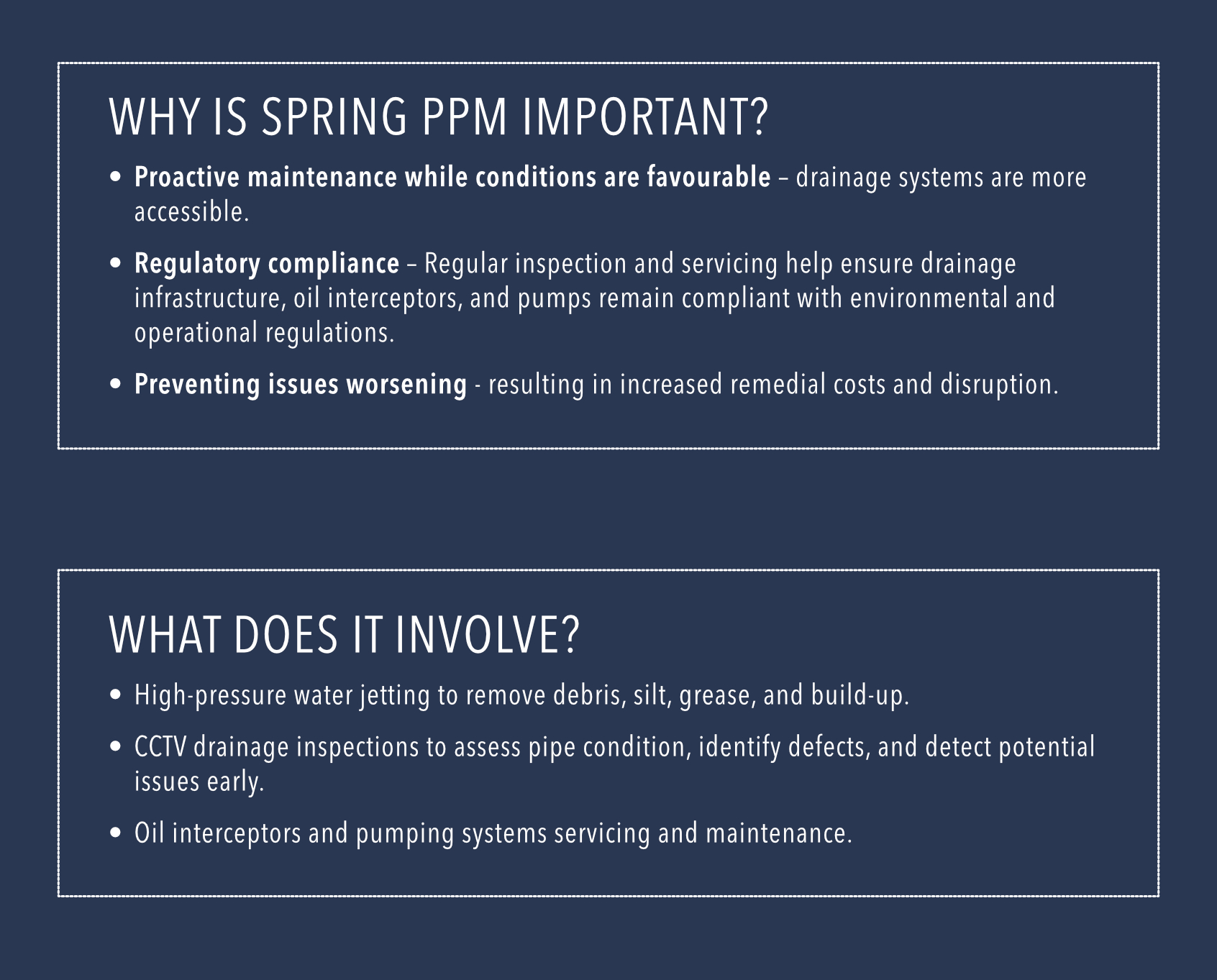
Prevention is always better than a cure, and PPM minimises risk before it becomes a costly, disruptive issue.
In the long term, this increases asset value and protects investment.
At WJ Shirley, we specialise in PPM, particularly for asset portfolios and are trusted by leading property managers who understand the value in annual maintenance, rather than emergency repair work.